



FRESC Snake River Field Station
FRESC Cascadia Field Station
FRESC Olympic Field Station
Forest and Rangeland Ecosystem Science Center
Scientists from the Forest and Rangeland Ecosystem Science Center capitalize on their diverse expertise to answer scientific questions shaped by the environments of the western United States. We collaborate with each other and with partners to provide rigorous, objective, and timely information and guidance to support management, conservation, and restoration of the Nation's natural resources.
FRESC Research Teams
FRESC Research Teams

FRESC scientists, individually or collaboratively with partners, investigate high-priority questions about biological systems.

News
Tree rings provide an important multi-century context for the current wildfire crisis
Tree rings provide an important multi-century context for the current wildfire crisis
Amphibian Week with USGS: Science for Healthy Habitats
Amphibian Week with USGS: Science for Healthy Habitats
Land Treatment Exploration Tool 3.0 Launch
Land Treatment Exploration Tool 3.0 Launch
Publications
Detecting bumble bees in the wild using environmental DNA: Development and validation of a qPCR assay for the endangered Franklin’s bumble bee (Bombus franklini) Detecting bumble bees in the wild using environmental DNA: Development and validation of a qPCR assay for the endangered Franklin’s bumble bee (Bombus franklini)
Environmental DNA (eDNA) sampling is a noninvasive alternative to conventional methods of surveying insects that may be particularly useful for detecting pollinators. We developed a quantitative polymerase chain reaction (qPCR) assay to detect the DNA of Franklin’s bumble bee (Bombus franklini) from flower samples and conducted an initial test of the assay using samples collected within...
Behavioral shifts mask the success of legislation and outreach for endangered species recovery Behavioral shifts mask the success of legislation and outreach for endangered species recovery
A fundamental challenge in conservation is assessing the efficacy of recovery actions to optimize endangered species management. Considerable recent attention has focused on effective measures to counter the endangerment of avian scavengers, which have declined worldwide, primarily due to poisoning. One iconic example is efforts to recover the critically endangered California condor...
RoadxStr user’s guide—For collection of road-stream crossing assessment field observations RoadxStr user’s guide—For collection of road-stream crossing assessment field observations
Intersections of drainage networks and road networks represent a critical nexus between natural waterways and human infrastructure. Managing these systems involves decisions related to management of infrastructure, hydrologic and geomorphic processes, and ecological connectivity. Interactions among these systems influence multiple values, including the intactness of transportation...
Science
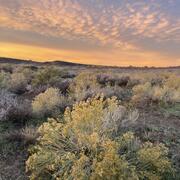
Enhancing Rangeland Recovery by Forecasting Seed Establishment
This project is synthesizing information about plant establishment and building a tool to deliver forecasts of restoration success, helping to maximize the chances that restoration efforts will be successful.

LTDL and LTET Team (FRESC)
The Land Treatment Digital Library (LTDL) and The Land Treatment Exploration Tool (LTET) are practical resources for land managers planning restoration and rehabilitation projects on public lands.

Land Treatment Exploration Tool
The Land Treatment Exploration Tool provides a practical resource for managers who are planning restoration and rehabilitation actions on public lands. The tool generates a variety of spatial products while being user friendly for all levels of GIS expertise, even to those with little or no experience.